
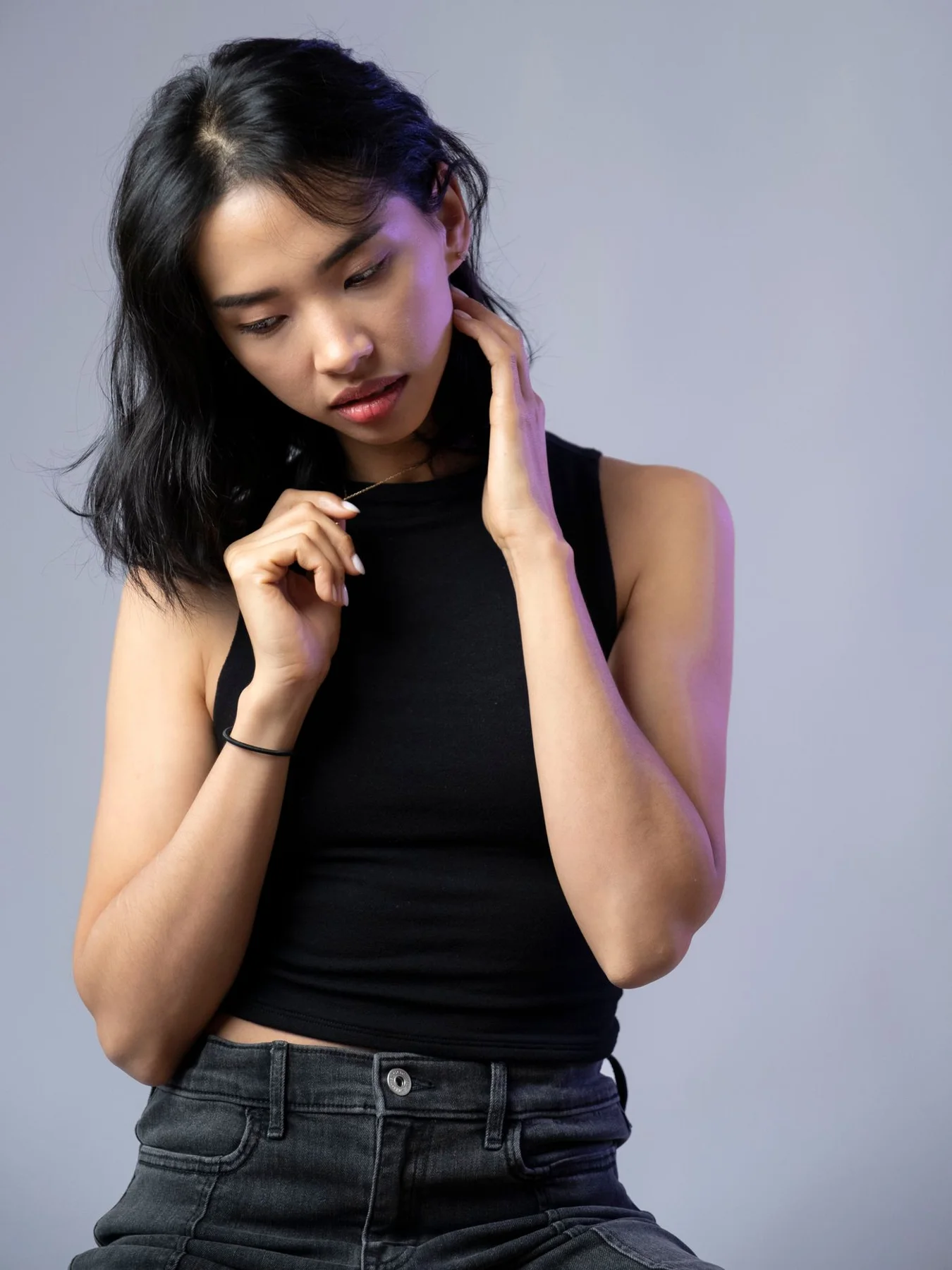
A tank beneath a cardigan or overshirt can simplify an outfit when it also works after that layer comes off. Assess it as a complete indoor top rather than something always partly hidden. Neckline, straps, armholes and length each affect the role. Choose according to your coverage preferences and setting, using the actual supporting layers instead of assuming every plain sleeveless top is interchangeable.
Try the real base arrangement
Wear the items normally chosen underneath and assess front, sides and back while seated too. Repeated pulling at straps or armholes suggests another cut may serve better. Do not depend on the outer layer staying closed all day to conceal a top you would not comfortably wear alone. A compact size is not a substitute for a useful coverage relationship.
Reach and sit
Move naturally and notice whether the hem lifts, the armhole rubs or shoulder placement changes. Close fit and restriction are different. Compare the actual construction rather than choosing solely by a size label. A short trial that needs repeated correction provides useful information about the garment, even when its simple standing silhouette appears appealing.
Check the waistband position
Use the planned trousers or skirt. Compare a modest tuck with untucked wear where appropriate. Extra length can bunch inside a fitted waistband, while another hem can roll or lift. Assess seated sides and back. Choose what remains comfortable after movement instead of preserving one arranged front view. Another layer should not be required merely to hold an unsuitable lower edge down.
Read fabric and care
Assess coverage in ordinary light and follow return conditions for a purchase trial. Product images do not establish how material sits over your supporting layers. Check composition, washing and drying instructions. A light tank may serve underneath clothing, while a more substantial version suits wearing alone. Choose the role knowingly rather than assuming every piece meets both equally.
Add the layer and bag
Try the cardigan or overshirt and observe whether it pulls the straps. Include the bag at a realistic load. Several shoulder lines can become uncomfortable together. Keep jewellery clear of catches and choose outerwear for actual temperatures. The tank should make removing a layer easier, not create a second fit question once the room becomes warm.
Does a plain base need more detail?
Not automatically. Interesting bottoms or texture in another garment may be enough. Use accessories because you enjoy them rather than because simplicity seems unfinished. The successful tank fits, moves and launders realistically, making the extra layer a temperature choice instead of a permanent cover for an indoor top that does not serve its intended role.
Related reading
A Comfortable Weekend Capsule Built Around Your Actual Plans, Transitional Weather Layers That Are Easy to Adjust.