
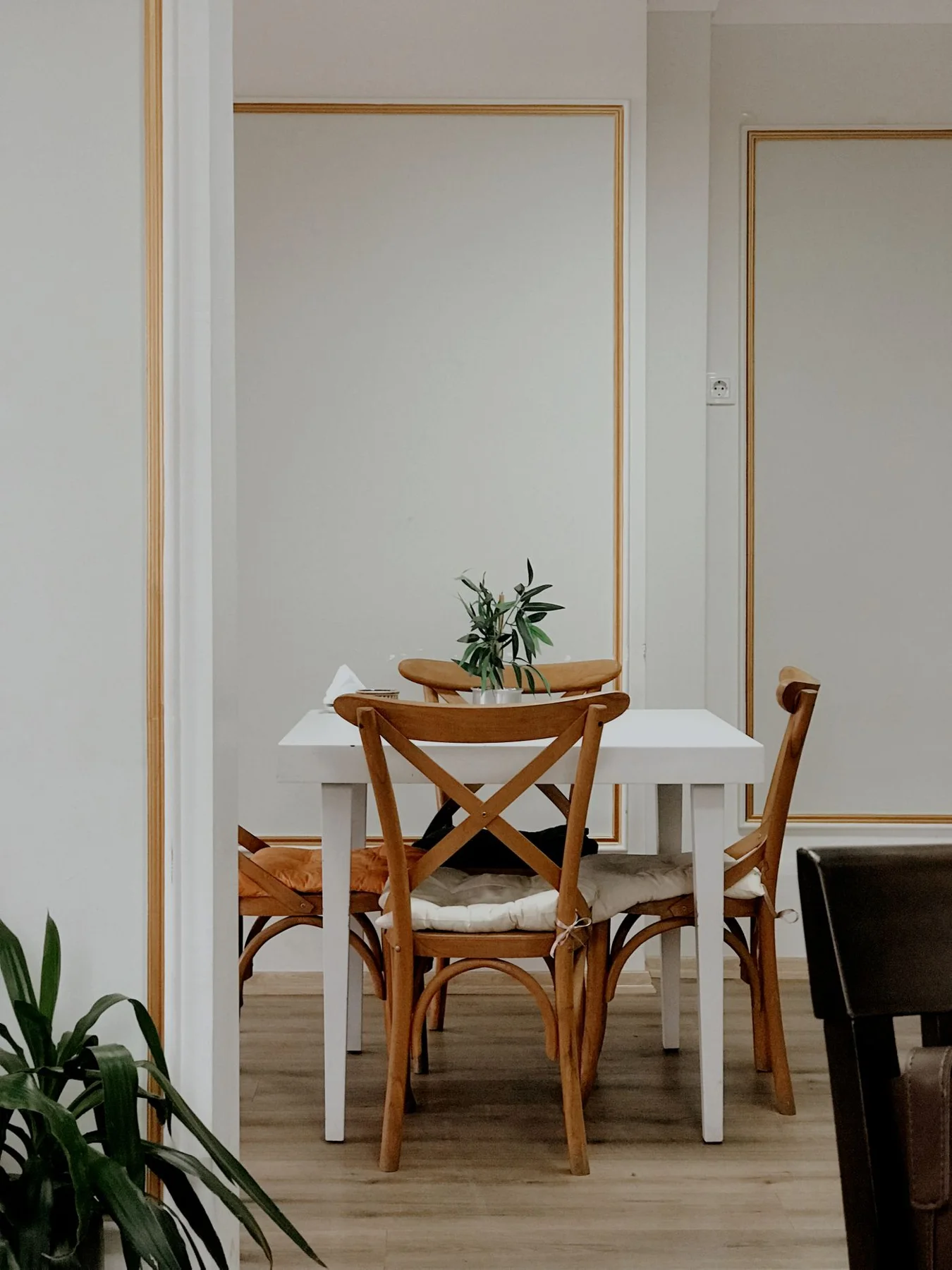
A dining chair can fit beneath a table while still being awkward when someone actually sits. Pull-out space, knee clearance and the route around the occupied seat matter before choosing another set. Test the arrangement with the table in its normal position. A small dining area becomes more useful through accurate movement clearance, not simply the narrowest chair found in a product list.
Measure the usable table space
Record height beneath rails or other obstructions as well as tabletop height. A chair's seat may be suitable while an arm prevents it tucking in. Compare the actual dimensions rather than assuming similar-looking furniture is compatible. Include the number of people who normally eat there instead of arranging for the largest imagined gathering every day.
Pull the chair out fully
Sit, stand and move around the occupied chair. Check the nearest wall, cabinet and ordinary walking route. A room that works with empty chairs pushed in may fail during a meal. Mark the proposed footprint before buying if a trial is unavailable. The useful measurement includes movement, not only the outline of the furniture at rest.
Compare comfort and storage
Armless chairs may tuck more closely under some tables, while arms can offer a different feel. Neither is universally better. Try sitting where possible and consider the length of ordinary meals or work sessions if the table has another role. Do not choose an uncomfortable tiny chair solely to preserve a layout that needs reconsideration.
Check condition and instructions
Read assembly, load and care guidance for the actual chair. Inspect joints and any damage when buying secondhand. A loose chair needs appropriate assessment before use, not a decorative cover to hide the fault. Choose suitable glides or floor protection according to the chair and flooring guidance rather than assuming one adhesive pad works on every surface.
If the room feels crowded
Reassess the table position and unused nearby pieces before replacing every chair. A smaller active set or another suitable layout may help. Keep doors and access clear. Occasional extra seating can have a separate safe plan instead of occupying the daily route permanently. Avoid squeezing in another place setting at the expense of everyone's ordinary movement.
Do chairs need to match the table?
No. A clear relationship in scale, finish or shape can work without a matching suite. Settle fit and comfort first, then compare the visual effect in the actual room. Maintain joints and surfaces as directed and keep the pull-out area usable. A considered dining setup lets people sit, stand and share the table comfortably, rather than looking spacious only while every chair is empty and pushed away.
Related reading
Continue with An Autumn Home Refresh Using What You Already Own and Beginner Weekend Walking Essentials for an Easy Local Outing. These existing guides provide a broader starting point for the related wardrobe, home or planning decision.