
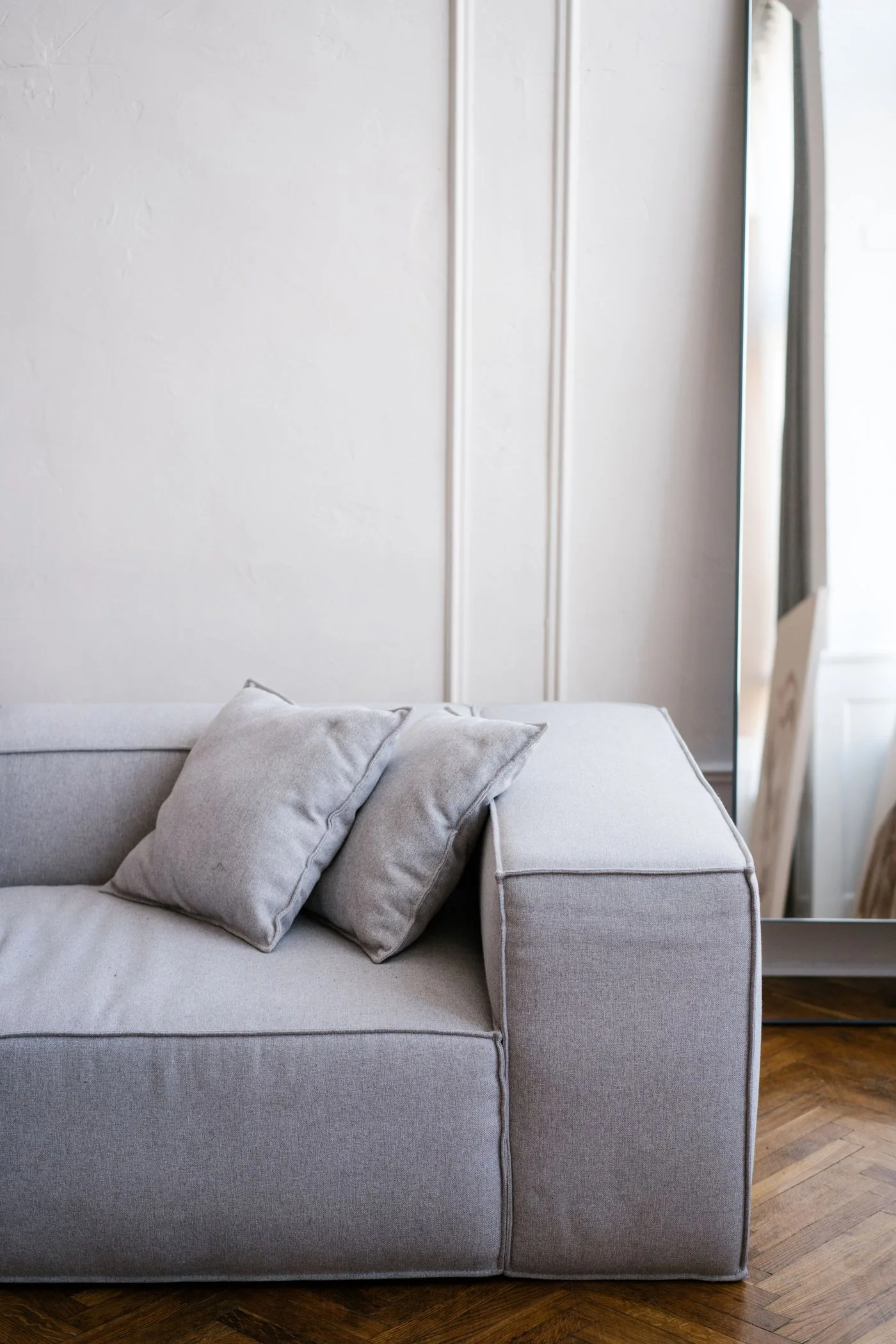
Two cushion patterns are easier to compare when the sofa and surrounding room stay the same. Start with suitable pieces already owned and change one visible arrangement at a time. The useful question is what the pattern contributes beside the actual upholstery, not which photograph looks most professionally styled. A modest comparison may reveal that the collection already contains the variation you wanted.
Read the sofa before the trial
Look at its upholstery, arms and back from an ordinary distance. A plain broad surface provides one background, while a visible texture adds another kind of detail. Keep the existing furniture as the constant reference.
Include the wall and curtains in the broader view. A close sofa crop can hide strong surrounding colours that influence how a cushion reads. The room's actual large areas matter even when they do not appear in the most attractive detail image.
Keep the visible amount comparable
Use the same number of suitable cushions and similar positions where the actual pieces allow. One small patterned object cannot be compared with several large ones without recognising that quantity and scale changed too.
Keep cover and insert pairings appropriate to their actual information. A visual trial should not require forcing components together simply to make the photographs consistent. Product fit and care remain separate from the pattern preference.
Name the visual difference
Look at the marks rather than relying only on a style label. A broad motif remains readable across the room; a fine repeat may become a softer varied area. Neither is inherently more considered or more suitable for every home.
Keep material descriptions grounded in actual product information. A textured-looking surface can contribute visually without establishing its composition. The image is useful for appearance within those limits.
Review two ordinary distances
Compare the view from the room entrance and from the seat normally used nearby. The same pattern can be distinct in one and almost quiet in the other. Choose the observation relevant to the role you want the cushion to have.
Keep other accessories steady during the first review. Adding a matching throw to only one version can make it seem better connected for a reason unrelated to the pattern itself. Try that additional textile later as a separate question if a suitable owned item is available.
Return unused trial pieces to their understood places unless a new role is agreed. The comparison should not create unexplained gaps elsewhere in the home. Record the actual pattern and reason you preferred it, such as the larger mark remaining clear from the doorway. A focused observation can finish the task without turning one cushion choice into a new set of matching objects the sofa never needed.
Related reading
Matching a Cushion Pad to Its Existing Cover, A Warm, Collected Living Room Without Starting Again.