
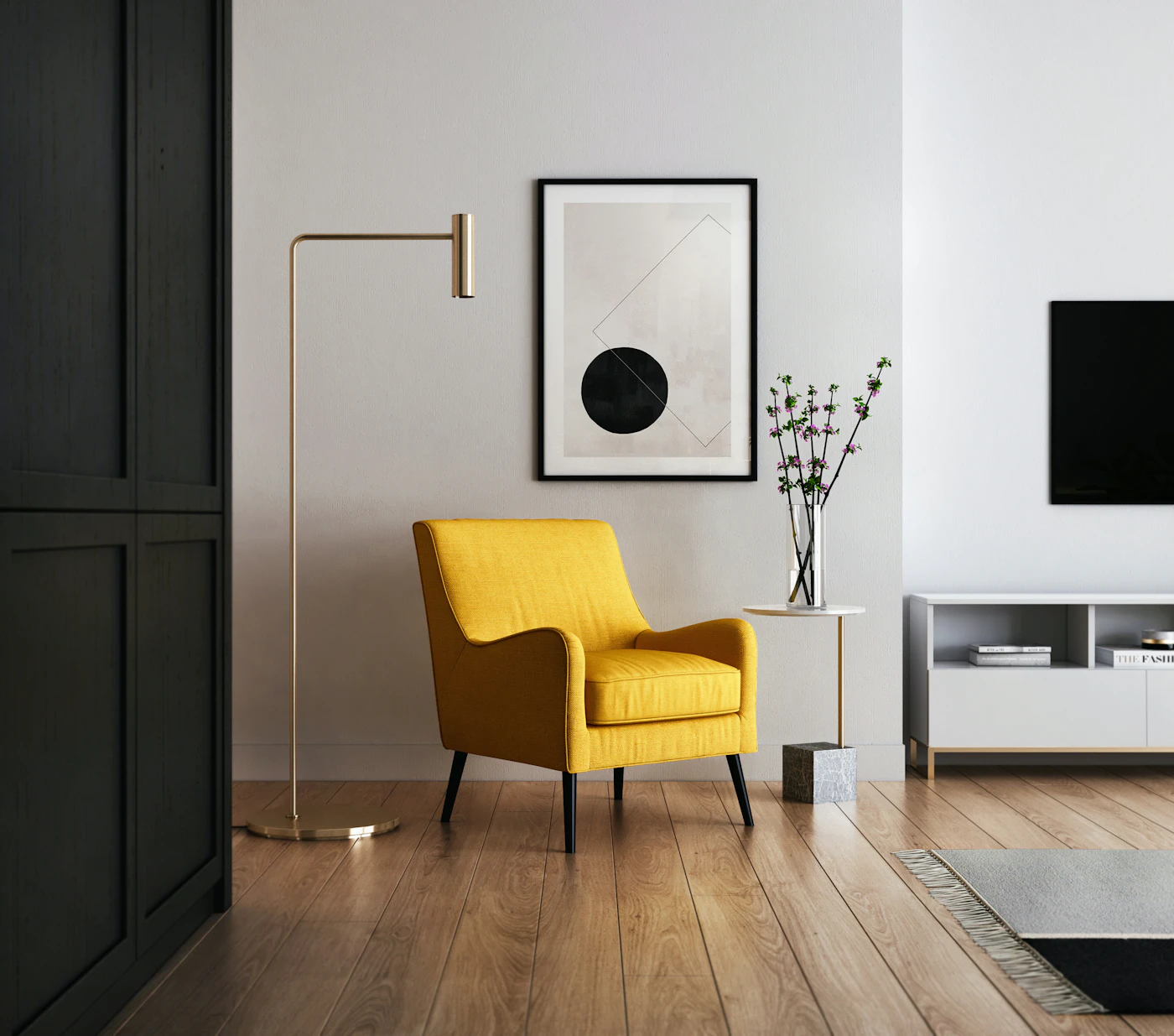
A reading chair can support an ordinary pause without becoming a dedicated room of its own. The practical question is how the session ends. A book, note or personal item can remain after you leave, gradually turning a shared corner into an unexplained collection. Plan a small return route so the place can serve reading and the rest of household life without another storage purchase being assumed necessary.
Choose one actual session
Use a time when you genuinely expect to read and material already in use. A brief pause and a longer session can ask different things of the room. Keep the first review modest rather than designing an entire lifestyle around a furniture photograph.
Use the actual chair in its intended manner and keep your own comfort central. A yellow chair beside a lamp illustrates a visual scene; it does not promise an identical experience or practical arrangement in another room.
Name what pauses nearby
Keep the current material identifiable rather than letting unrelated stacks accumulate beside the seat. A borrowed book carries ownership and a next-step context that should remain clear. A short private note can preserve a genuine action without displaying unnecessary personal information.
Give other belongings appropriate places according to their own guidance. A book cover, cup or decorative object should not automatically become storage for glasses or another item merely because it is close to the chair.
Preserve the ordinary room route
Review the room while doors, windows and shared storage are used normally. A personal reading pause should not require everyone else to maintain an empty styled scene. An existing appropriate surface may serve the belongings more clearly than another decorative stand.
Do not assign a furniture role to an unrelated object because it appears to be the right height. Keep actual product information and household use central rather than treating every gap around the chair as a space needing another purchase.
End the session deliberately
Mark the reading place appropriately, return personal items to their understood locations and identify any genuine unfinished note. A receipt used temporarily as a marker should not lose the reason it was originally kept.
If the book stays nearby for another session, make that a deliberate current-use choice. Its presence does not give every neighbouring object the same permanent role. Shared space benefits from a modest clear agreement rather than invisible assumptions about ownership.
Record only what helped
Notice whether the session worked at the real time and within ordinary household activity. One useful pause does not establish a universal arrangement for every hour. Keep an observation if it genuinely informs another decision rather than collecting references for their own sake.
A clear ending lets an existing chair support reading while keeping the room available for its other uses. It preserves the pleasant pause without turning the corner into a growing storage project, leaving actual belongings and household life more important than maintaining the exact appearance of a photograph.
Related reading
The Bedside Book without the Waiting Pile, A Cosy Winter Evening, Planned Around Your Own Routine.