
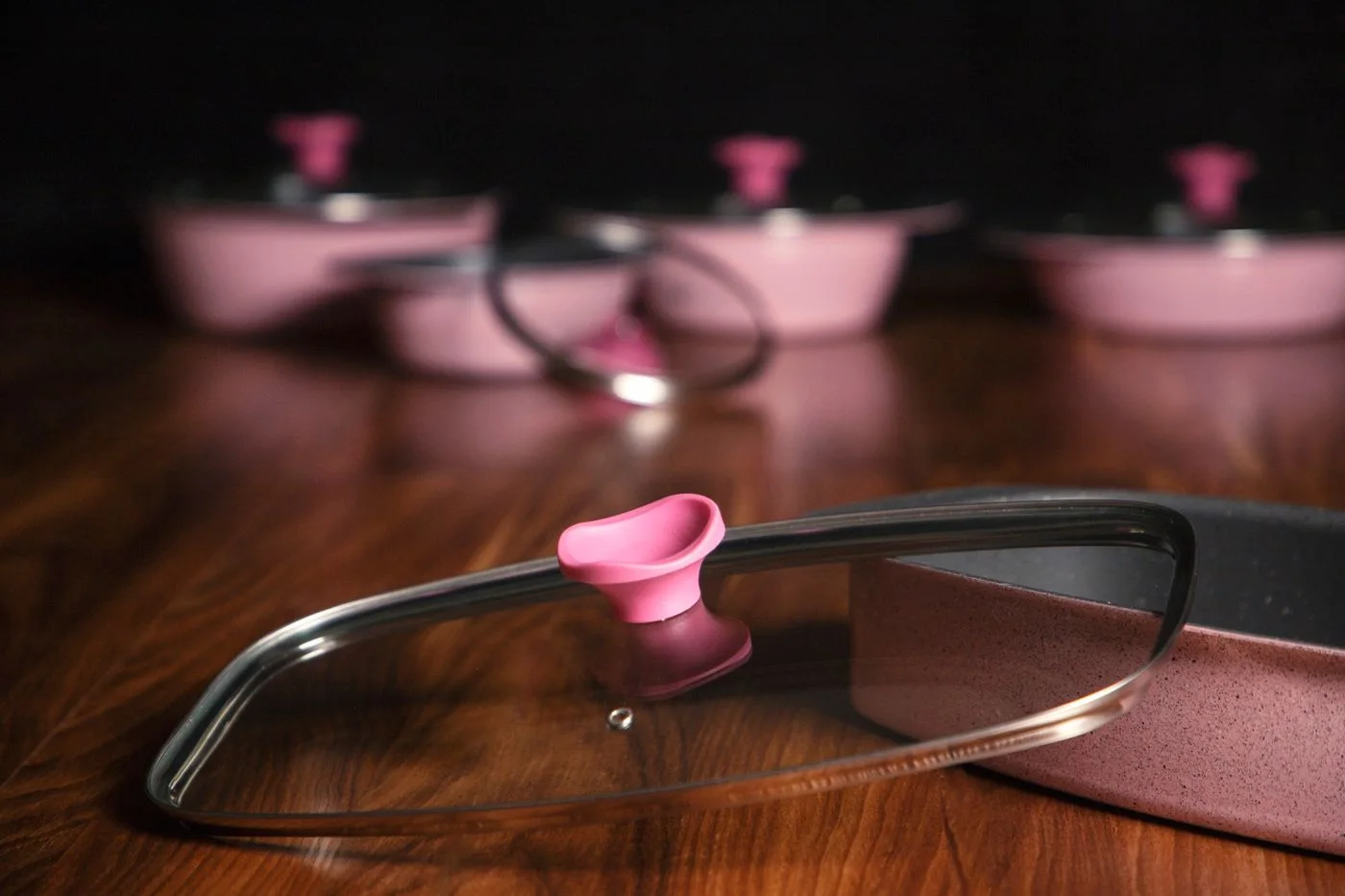
A cookware cupboard should work when a clean pot returns, not only when the door is closed. Handles, lids and occasional large pieces can turn the action into a stacking puzzle. Start with the regular cookware and its care needs. The useful arrangement makes the everyday pieces accessible while respecting material and furniture guidance, without expecting every item to nest in one dense group that must be dismantled before cooking.
Complete suitable care first
Handle remaining food according to reliable relevant food-safety guidance and follow cookware instructions for cooling, washing and drying. Do not rush hot or unready items into storage to clear the counter. Materials and finishes differ. A neat appearance is not a reason to use an unsuitable cleaning method or ignore appropriate handling. The return task begins when the cookware is ready for it.
Identify the daily priorities
Separate regularly used pieces from occasional ones and inspect condition. Two similar pots may have distinct roles, but an unused spare should not block the favourite. Check compatibility with the cooking method. Avoid replacing a whole set merely to solve one awkward lid. Quantity or placement can be the underlying issue rather than the absence of a matching organiser.
Match lids clearly
Keep each lid's relationship understandable and compare any rack with the actual dimensions. Heavy glass lids should not be crowded where removing a neighbour dislodges them. Read intended-use guidance rather than assuming every lid can be hung or stored vertically. A consistent simple position may be enough. The organiser should support the items, not require them to fit an attractive but unsuitable slot.
Nest only where permitted
Follow cookware advice and use recommended protection for finishes where appropriate. Keep stacks manageable to lift. If the daily pan is beneath several heavy pieces, change order or destination. Follow furniture loading guidance and choose accessible locations. A shelf that supports the weight still needs practical room for hands and movement by the regular user.
Measure the opening
Remove and return the usual pot and lid. Notice doors and handles that narrow the route. An organiser can fit inside and still be difficult to extract through the opening. Check the whole movement before buying. Keep the arrangement understandable to another household member rather than dependent on remembering an exact order of leaning lids and nested pans.
Where should the largest occasional item go?
Another suitable identifiable place may improve everyday access. Its size does not automatically deserve the most convenient shelf. The successful storage makes cooking easier before and after the meal, with appropriately cared-for pieces ready to use. It should not require reorganising the whole collection each time one pot comes back from the sink.
Related reading
A Cookware Gift: Check the Hob, Size and Storage First, Everyday Kitchen Essentials for a More Useful Worktop.