
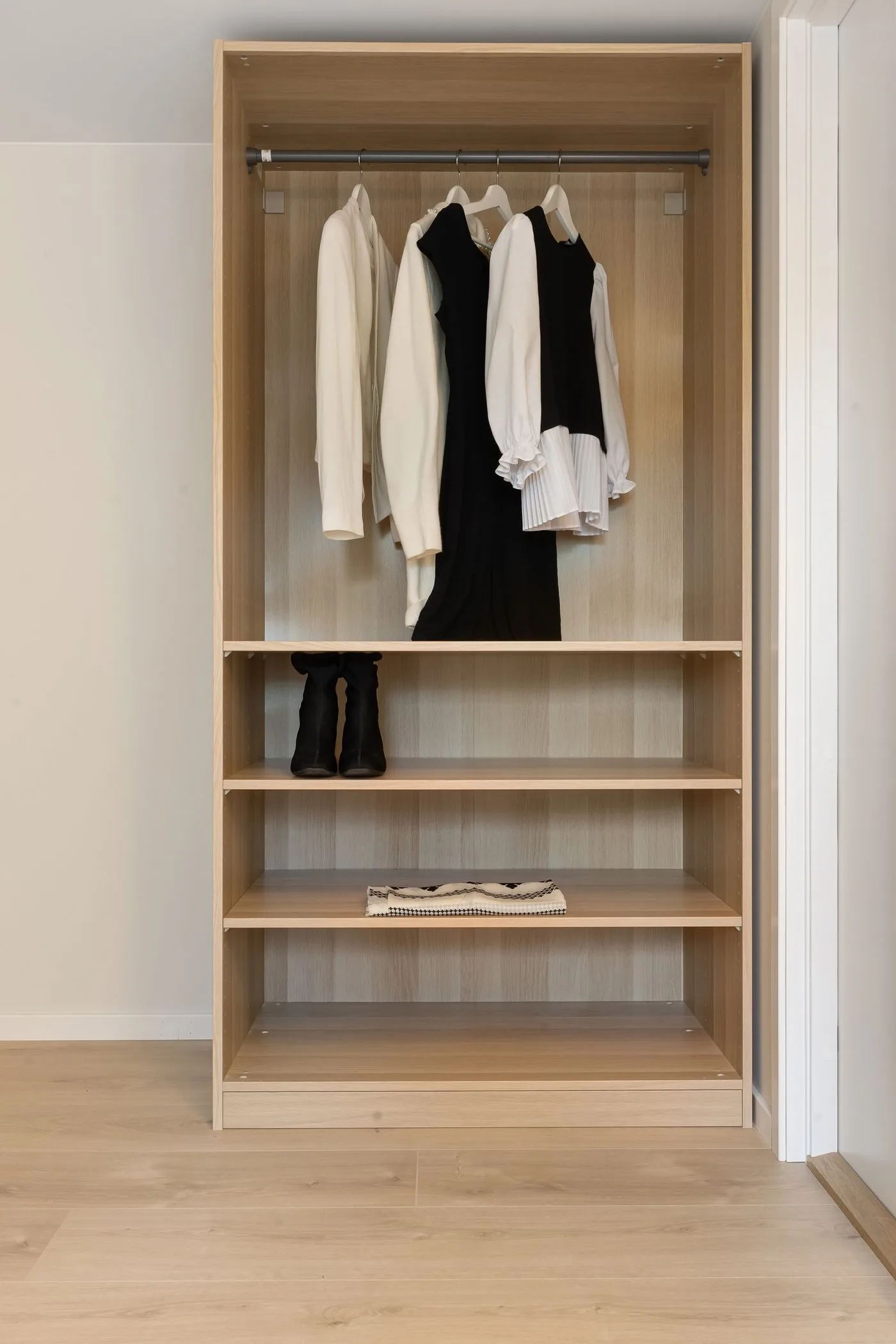
A rail can contain all the clothes and still be difficult to use. Sleeves catch, one jacket pulls out its neighbours and clean items wait outside because returning them is awkward. Leave functional space before considering larger storage. The goal is not an artificially sparse wardrobe picture, but room for appropriate support, visibility and ordinary movement into and out of the collection.
Check the furniture first
Follow installation, fixing and loading guidance. Inspect the rail and fittings and seek competent help where stability is uncertain. Thinner hangers do not solve an unsuitable load. Keep doors and drawers working and avoid unsupported extensions intended to create another hanging row. The furniture's requirements remain relevant even when every garment technically fits on the existing rail.
Try regular removal
Take out several frequently worn items and notice where movement becomes difficult. The problem may be concentrated in one area. Grouping shorter and longer pieces suitably can reveal access without another purchase. Keep the arrangement understandable to whoever returns clean laundry. A wardrobe organised only for one precise morning sequence may be less practical when several different outfits are used through the week.
Review hanging suitability
Read garment care and storage information. Some knitwear may be better folded, while structured items need appropriate support. Move clothes only when another suitable destination exists. Do not transfer the whole problem to an overfilled drawer. Seasonal or occasional pieces can have separate appropriate storage, but should remain identifiable and accessible for their actual role.
Create a working gap
Leave room to slide a hanger and lift the garment comfortably. The amount depends on construction, not a universal spacing rule. Test with real clothes. A coat needs different handling space from a thin blouse. Empty room on the rail is functional capacity rather than a gap that must be filled with the next purchase.
Make return straightforward
Put ready garments back after appropriate care in a familiar clear location. Avoid a system so exact that one new piece requires reorganising everything. A few useful groups can be enough. Keep temporary decisions contained and resolve them deliberately. A pile outside the wardrobe may signal an access issue even when the collection is not especially large.
Is removing clothing the only solution?
No. Placement, suitable folding and a realistic seasonal plan can help. Some pieces may no longer belong, but that is a deliberate decision rather than a compulsory minimalism exercise. Review after ordinary use. The successful rail makes clothes easy to find and return without force, allowing the wardrobe to support the week instead of becoming another tightly packed storage display.
Related reading
A Comfortable Weekend Capsule Built Around Your Actual Plans, A Private Home-Measurement Note for Shopping Trips.