
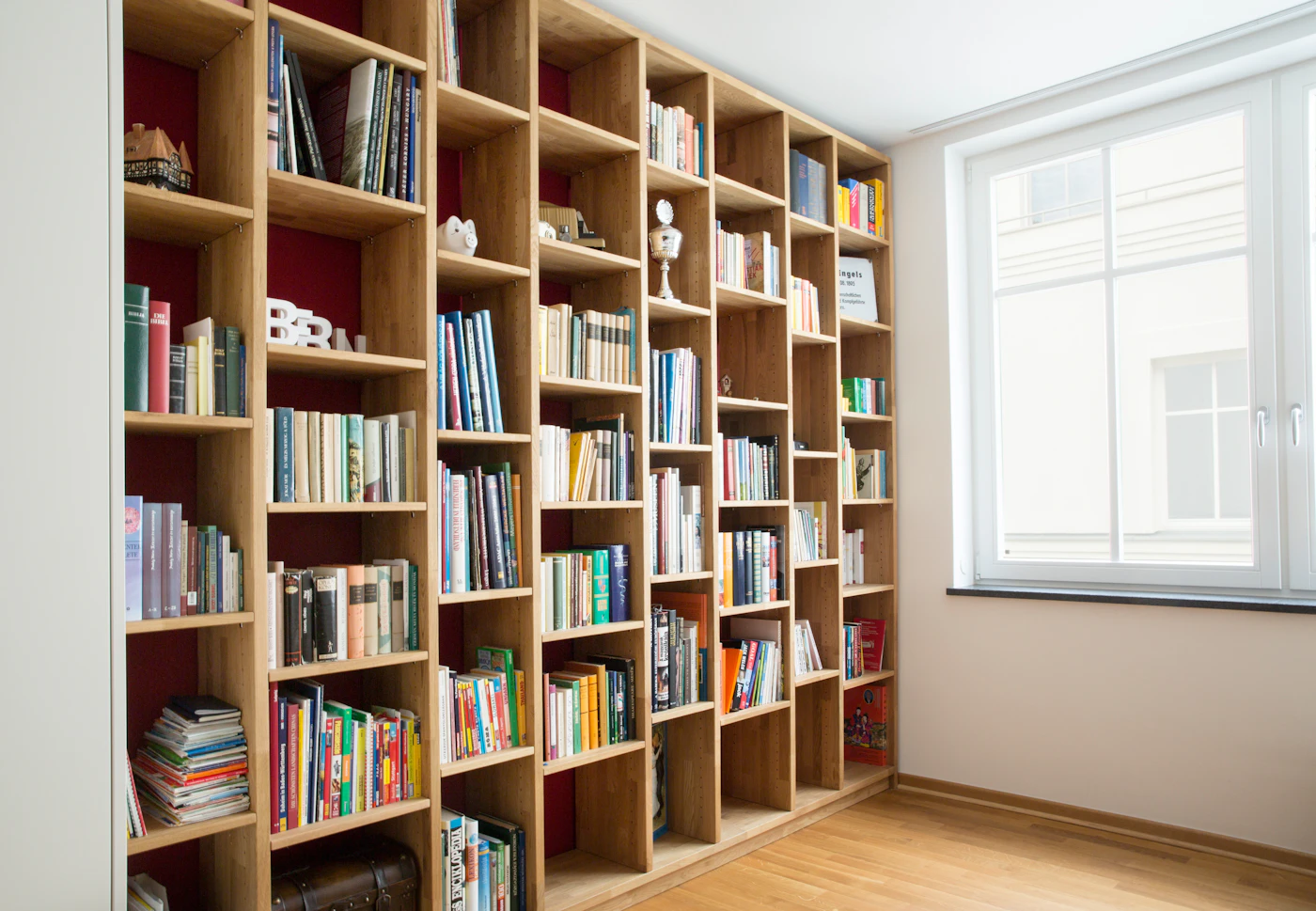
A bookshelf needs to hold the actual books and let them be removed easily. Depth, height and reach matter as much as the total capacity advertised. Begin with the collection intended for the unit, separating current use from long-term storage. A larger bookcase can hold more while making a small room harder to move through, so the practical comparison starts with both contents and location.
Measure the largest useful books
Check height, depth and any unusual shape in the group. Do not choose every shelf around one oversized item if it could have another suitable home. Adjustable shelves can help where their range and load guidance suit the collection. A decorative image of neatly matched spines does not show how mixed real books will fit.
Allow room for removal
A book that technically fits beneath the next shelf can still be awkward to take out. Try the hand movement needed and keep frequently used titles at a comfortable reachable height. Avoid relying on unstable piles or unsafe reaching to make a high-capacity unit practical. The arrangement should support ordinary browsing, not only a tightly packed storage photograph.
Mark the room footprint
Outline the proposed depth and width and walk the usual route. Include nearby doors, drawers and seating. A deep shelf can project into a narrow space, while books placed behind other books may be forgotten. Choose depth for the real collection instead of assuming more storage is always useful. Another layout or editing unused items may solve the problem before a purchase.
Check fixing and load requirements
Follow the furniture maker's assembly, anchoring and shelf-load guidance, using suitable competent help where needed. Wall type, weight and property permission can affect the arrangement. Do not assume a freestanding appearance means no fixing is required. Ask the supplier about unclear specifications before buying rather than improvising a mounting method afterwards.
Keep display separate from overflow
A few personal objects can sit among books if safely positioned, but leave useful removal space. If every gap becomes decoration, the shelf may stop serving its main task. Rotate a small display rather than buying another unit to preserve an overcrowded arrangement. Keep heavy and fragile items appropriately supported and away from unsuitable edges.
What if books still accumulate elsewhere?
Check whether the active shelf is easy to reach and has a clear return place. A finished-reading group may need a separate suitable destination. More capacity will not necessarily fix an unclear routine. Dust gently, keep books away from persistent damp or heat and maintain the furniture as directed. A useful bookshelf supports reading and retrieval as well as the visual pleasure of a personal collection.
Related reading
Continue with A Warm, Collected Living Room Without Starting Again and A Welcoming Guest Room in a Space That Works Hard. These existing guides provide a broader starting point for the related wardrobe, home or planning decision.