
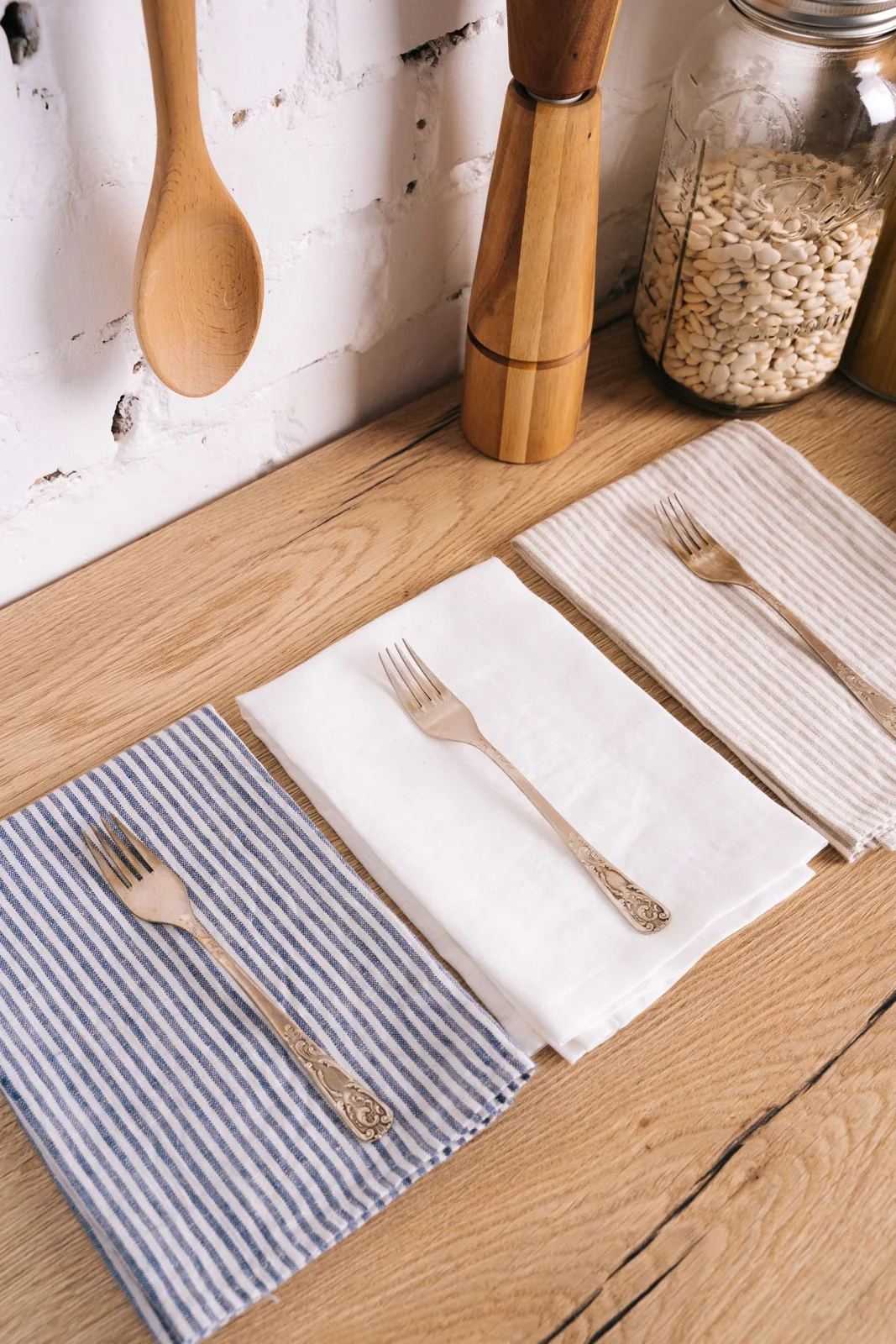
Cloth napkins can be ordinary useful textiles rather than a formal hosting project. Begin with size, feel and the maintenance you will actually do. A modest group can serve meals without matching rings or intricate folds. The useful supply is clean and accessible when needed, not stored indefinitely because setting the table is expected to reproduce a photograph of a complete coordinated dining range.
Compare dimensions in use
Read actual measurements and try a simple fold beside the usual plate and glass. A tightly folded product image can hide scale. A large piece may occupy more display space than the table can spare, while another size suits different preferences. Decorative trim should not make the textile awkward for its main purpose. Choose use and presentation together rather than by fabric quantity alone.
Read care before buying
Check composition, washing and drying instructions. Similar-looking materials can behave differently. A crisp finish may require pressing you do not want between everyday meals. Choose that routine knowingly. A relaxed fold can be deliberate when it suits the fabric. The set should not remain unused mainly because its maintenance feels too demanding for the ordinary occasions it was bought to serve.
Count realistic use
Consider household needs between laundering rather than only the largest imagined gathering. Keep enough suitable clean pieces accessible and store spares appropriately. Follow relevant care and hygiene guidance for actual use. Fresh storage should remain separate from textiles awaiting laundering. A decorative container does not remove that distinction merely by clearing the visible table.
Keep setting straightforward
A folded piece beside the plate can be complete. Rings and elaborate shapes are optional and add objects to store. Leave space for food, glasses and comfortable elbows. A small table can feel considered through clear useful settings rather than decoration in every gap. Simplify presentation when it delays ordinary meals instead of saving the napkins indefinitely for a more polished evening.
Give used pieces a return route
Choose an appropriate place and follow the textiles' care guidance. Ensure readiness before returning them to clean storage. Leave enough drawer space to remove one without disturbing the whole group. A simple accessible fold may be more maintainable than a precise display. The routine should make repeated use easy for everyone, including someone who does not enjoy styling the table.
Must colours match the other linen?
No. A modest mix or quiet contrast can be intentional. Clean suitable function matters more than completing a range. Review actual use before adding another set. The successful napkins fit meals and laundering, remaining accessible through ordinary life. Their value comes from repeated use rather than the complexity of the fold or the number of decorative accessories accompanying each place.
Related reading
A Small Breakfast Table with Enough Useful Surface, Everyday Kitchen Essentials for a More Useful Worktop.