
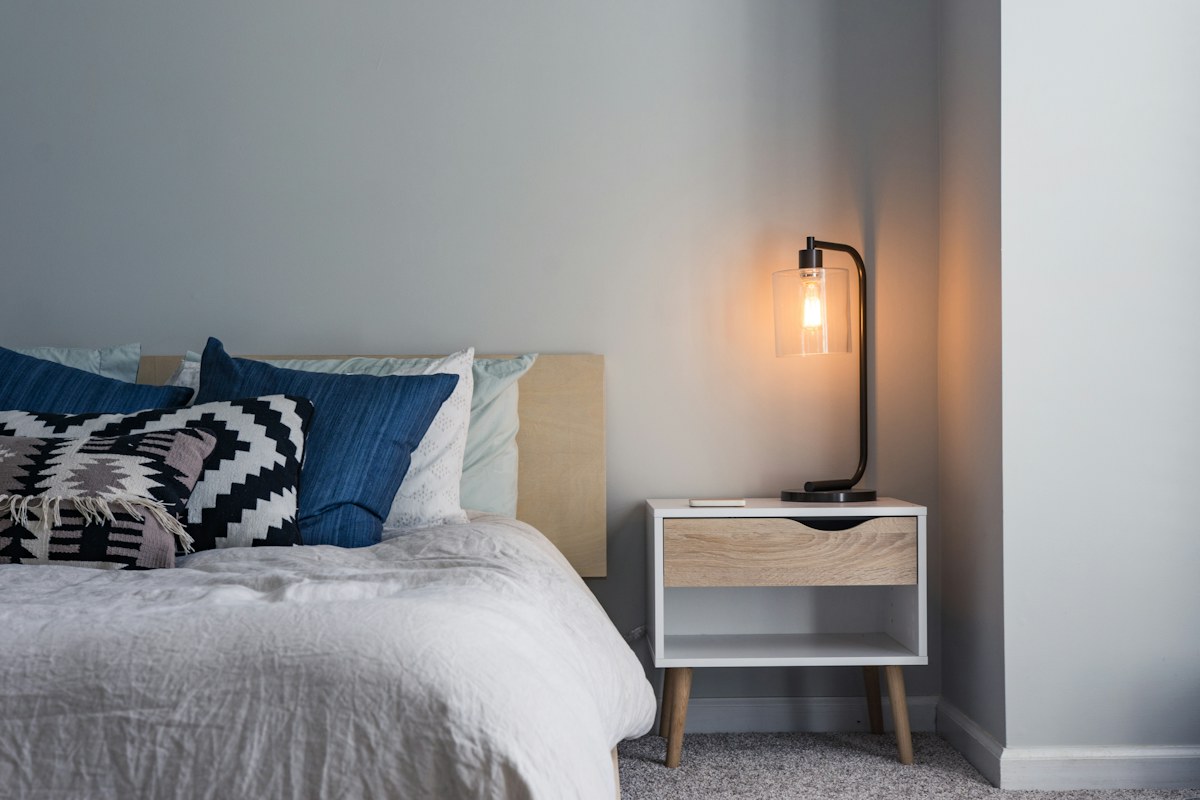
A bedside lamp may look ideal in a photograph while its control remains outside the frame. Compare that practical detail before choosing the object for its atmosphere. The useful question is how the actual person will operate the light within the room's intended arrangement, not simply whether the shade and bedding appear coordinated. A clear view of the complete product can reveal a different tradeoff from the most appealing illuminated image.
Describe the action required
Name the ordinary task: turning the lamp on from the intended position, finding the relevant control or ending a reading pause. Keep the person's actual preference central rather than assuming everyone uses the bed in the same way.
Use the supplied product information for the intended controls. A visible fitting in an image may not explain its function. If an important detail is unclear, preserve a focused question for the appropriate source rather than guessing from appearance.
Include the full product dimensions
Read the base, shade and overall size together with any supplied control location. A narrow-looking stem does not describe the complete footprint. Keep the actual bedside surface and the occupied bed in the comparison.
Do not measure a perspective photograph as though it were a reliable diagram. The image can show a visual relationship while remaining insufficient for precise placement. Use stated information and actual room references for those questions.
Keep electrical matters separate
Follow the real product's intended use and relevant instructions. This review is not guidance for altering fittings, cables or controls. An attractive photograph does not establish how another installation should be changed.
If the existing arrangement does not serve the task, retain that issue rather than reaching awkwardly to preserve the image. A suitable different product or another appropriate arrangement can be the considered result. The atmosphere should not conceal the ordinary action the lamp is meant to support.
Review the rest of the surface
Include the book, glasses or other belongings normally used at bedtime. They may need space near the control as well as beside the lamp. A photograph of an empty bedside table can omit that practical competition.
Keep the arrangement understandable for another person who uses the room. The control should not depend on a private sequence known only to whoever styled the surface. A simple explanation can be more useful than adding another storage object.
Once the task and product information are clear, compare the lamp's appearance with the existing furniture and textiles. Save the exact candidate and unresolved question if one remains. A bedside light can contribute mood, but its role is more complete when the ordinary person, movement and control remain visible alongside the warm photograph that first made it appealing.
Related reading
The Bedside Book without the Waiting Pile, Small Bedroom Upgrades That Make Daily Life Easier.