
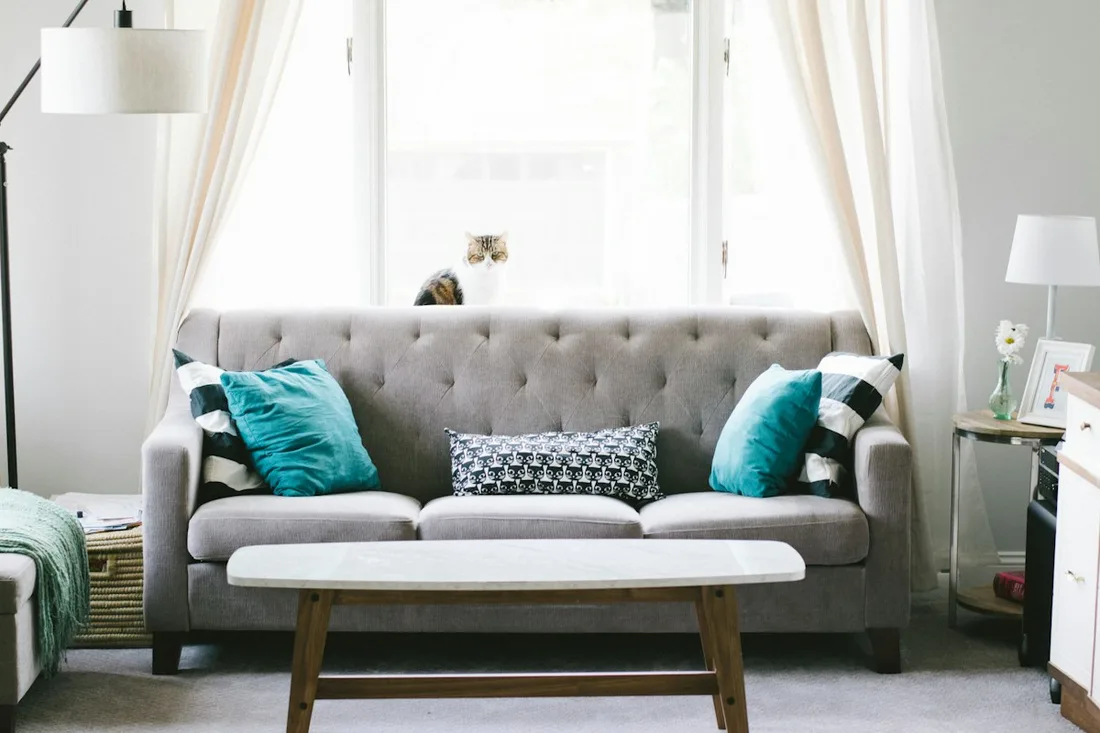
An accent colour can be tested before it becomes a set of new accessories. Start with one suitable object or textile already available and observe it in the actual room. The useful trial is small enough to reverse and practical enough to live with. A neutral background still contains wood tones, books, plants and other colours, so the new detail joins an existing scene rather than an empty decorating canvas.
Notice what will remain
Look at large furniture, flooring and walls alongside smaller existing objects. Identify their colours and textures without turning the exercise into a rigid formula. A new accent needs to coexist with those elements. The room may already contain enough variation. Recognising that can reduce the urge to buy several matching links merely to make one additional colour appear intentional.
Borrow one small piece
Try a cushion cover, textile or another suitable object in the proposed shade. Put it where it would genuinely be used. Do not obstruct a useful surface just to create the best view. Assess from the entrance and the usual seat. A single item can reveal whether the colour is enjoyable before a larger purchase makes the choice harder to reconsider.
Observe light changes
Look in daylight and after dark with the room's ordinary lamps. Colour and texture can appear different. A phone photograph may alter the effect, so use actual observation as well. If the shade only appeals in one brief lighting moment, decide whether that serves the role you want. A sample is more useful in the real room than a collection of separate product images viewed under different conditions.
Repeat only for a purpose
A second small occurrence may connect areas, but exact repetition is optional. Avoid buying another accessory simply to justify the first. Different shades or textures can feel natural. Keep the practical function of each item clear. A cushion should not make the sofa cramped, and a table object should not remove the only useful landing space.
Include care and comfort
Read material instructions and consider how the piece is handled, cleaned and returned. A colour you enjoy can arrive in a fabric whose maintenance is inconvenient. Choose that routine knowingly. The room should not need to be preserved like a display to keep the accent looking correct. A useful ordinary item may contribute more than a delicate coordinated group moved aside before every activity.
When should the trial stay small?
When it already adds enough interest or the rest of the room is visually busy. More is not automatically more coherent. Live with the arrangement before expanding it. The successful accent remains enjoyable through changing light and everyday use, with practical functions intact and no pressure to replace familiar furniture simply to support one newly chosen shade.
Related reading
An Autumn Home Refresh Using What You Already Own, A Warm, Collected Living Room Without Starting Again.